Automation blog
Industrial automation and robotics: still a man’s world?
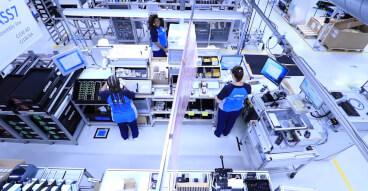
07 February, 2024 What is it like being a woman in automation today? Three women from OMRON Europe talk about their experiences in the world of industrial automation, the challenges they face, and the tools and support that have helped them to thrive.When Wendy Tonks first started her career in engineering in the UK just over 20 years ago, one of the first ground rules that she had to lay down was that she wasn’t a tea lady.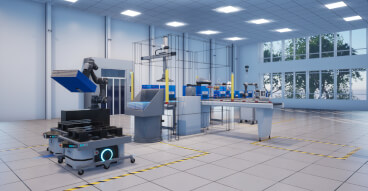
Embracing change: Breaking down the process of flexible manufacturing
30 January, 2024 The fast-moving consumer goods market is experiencing a transformative shift, driven by factors such as consumer empowerment, customization demands, health-conscious preferences, veganism, ethical concerns, and sustainability. We expect that it will undergo more changes in the next decade than it has in the previous 50 years. This necessitates the adaptation of production and supply chains to meet emerging trends. The future of fast-moving consumer goods factories will likely involve smaller, smarter facilities with autonomous movement of goods and interconnected systems.Machines, whether standalone or interconnected, need to be more flexible than ever before to ensure the timely supply of appropriate materials and packaging. Production has to be more agile, increasingly producing retail-ready items with a high mix-low volume approach with zero recalls. The question is how to realize this with minimal cost and fast ROI?
What’s in store for automation in 2024? Six predictions from OMRON Europe
13 December, 2023 The succession of shocks over the last few years has heralded a new era of heightened geopolitical and economic risk. This is prompting manufacturers to build resilience and flexibility into business models and rethink global supply chains and relationships. At the same time, pressure is mounting to incorporate ESG principles into operational decision making. AI, data science, digital twins and sensing, monitoring and vision technology will all be essential to developing automation and control solutions that can help the manufacturing industry adapt to this new reality. In this context, I would like to share the top six trends that will impact and shape industrial automation in 2024 and beyond.
EV transition made easy: Top three challenges to overcome in automotive manufacturing
23 November, 2023 The transition to electric vehicles is a challenging path for automotive manufacturers. Long-established companies that have traditionally produced vehicles with combustion engines are now venturing into an entirely new realm of vehicle platforms. Let us investigate the top challenges facing the electric vehicle manufacturing industry and explore the latest innovative solutions on the horizon.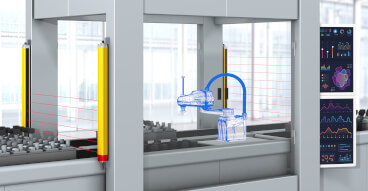
A meeting of minds: IT/OT convergence in industrial automation
22 September, 2023 Future-focused manufacturers are edging closer to their ideals of flexible, efficient and sustainable production by exploring digital transformation in earnest. However, as interest in digitalisation builds, it is becoming apparent that a huge gulf exists between the worlds of OT (Operational Technology) and IT (Information Technology). And this divide needs to be bridged if today’s visions for factories of the future are to become tomorrow’s reality.But before we look at why a convergence of IT and OT is necessary and how this can be achieved, let’s take a step back to basics and clear up some misunderstandings around the terminology.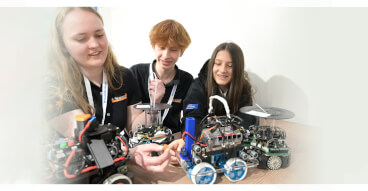
Empowering the workforce: OMRON's approach to skills development in European manufacturing
06 September, 2023 Delving into OMRON's unwavering commitment to nurturing skills that empower the next generation, while the industry embarks on a transformative journey – a journey that unlocks the full potential of the Fourth Industrial Revolution (4IR) while boldly moving towards the Fifth Industrial Revolution (5IR).In the halls of academia, the boardrooms of visionary business leaders, and the chambers of forward-thinking politicians, a fervent debate evokes. It revolves around the profound shift from the Fourth Industrial Revolution, 4IR, or Industry 4.0 as it is also known, to Industry 5.0 will change the world in which we live.Historically the Industrial Revolution was the First Machine Age, and electricity the Second, then electronics was the Third, and the internet as platform the Fourth Machine Age. We are now entering the Fifth Machine Age, which highlights harmonious human-machine collaboration and the contributions of the industry to society. This is the moment to not only adapt but to lead, to pioneer, and to create a future where innovation knows no bounds. Klaus Schwab, the founder and executive chairman of the World Economic Forum has observed that: “We stand on the brink of a technological revolution that will fundamentally alter the way we live, work, and relate to one another. In its scale, scope, and complexity, the transformation will be unlike anything humankind has experienced before. Our world is undergoing a transformative shift. Global production is evolving, driven by the automation of traditional industrial practices through smart technology, M2M communication, and IoT integration. This synergy fuels heightened automation, seamless communication, and intelligent machines that autonomously analyse and diagnose challenges.The rise of AI sparks debates, hinting at deeper transformations within our societal tapestry. As we navigate this dynamic landscape, we are poised to embrace innovation and reshape our future.
Top 4 Ways to Tackle Labour Shortage with Automation
06 September, 2023 Automation is a pathway to supporting manual workforce and not replacing them.Labour shortages in manufacturing are a growing cause of concern worldwide. While financial incentives and targeted workforce qualifications have been used as countermeasures, more innovative solutions are needed. Many manufacturers choose to automate repetitive activities but to what extent is it supporting the existing taskforce or is it taking away their jobs altogether?In 2023, Reuters disclosed an alarming trend: a record-high 53% of companies grapple with hiring difficulties. Staff shortages, soaring energy costs, combined with the pursuit of climate neutrality create new challenges. In the quest for sustainable manufacturing, innovative strategies to address labour gaps and enhance existing talent are the beacon of progress.Let us go over the top four ways to addressing the labour shortage and supporting the current workforce with automation:
From red lights to robots: OMRON celebrates 90 years of innovation
06 June, 2023 This year on Founder’s Day, OMRON looked back on 90 years of pushing technological boundaries, and looks forward to a future of automation innovation framed by sustainability, digitalisation and human-machine collaboration.May the 10th be with you… Every year, 10th May is probably the most important day in OMRON’s calendar. On this day, 30,000 OMRON employees around the world celebrate the life and legacy of the company’s founder, Kazuma Tateishi. They do this by recommitting to Tateishi’s vision of using technology to create a better world and by giving back to society - often by participating in volunteer and charity projects in their communities. Innovation Milestones OMRON's journey of innovation began in 1933 with the development of a high-precision timer for X-ray photography. This marked the company's first contribution to addressing societal needs. In 1960, OMRON unveiled the world's first non-contact proximity switch, revolutionizing advanced mass production capabilities. Since then, OMRON has continued to introduce groundbreaking technologies, including the first automatic traffic signal, unmanned train station system, wearable blood pressure controller, ultra-high-speed fuzzy logical controller, and automatic cancer cell diagnostic equipment.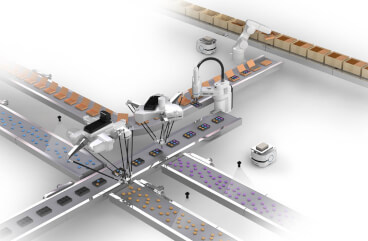
Collaborative capabilities
31 May, 2023 Omron Automation robotics can be used in collaborative applications, where they work alongside human operators to pick up and place objects. The robots are designed to be safe to work around, with sensors and other safety features that prevent collisions and other accidents. This allows manufacturers to use collaborative robotics in a wide range of applications, improving productivity and efficiency while maintaining a safe work environment. With collaborative capabilities, manufacturers can take advantage of the benefits of automation while still maintaining a human touch in their production processes.
Buying or Leasing? How to finance your new cobot
26 April, 2023 Food for thought for SMEs when funding automation projectsSkills shortages, digitization, sustainability, and energy-saving plans are accelerating automation projects in many companies. Once manual processes that lend themselves to automation have been identified, the next question that usually follows is: And what does it all cost?It can make sense to consider options such as leasing or robot-as-a-service. One example of tools that give small and medium-sized enterprises (SMEs) in particular a better overview the financial aspects of automation is the ROI calculator from OMRON. Anyone currently considering the purchase of a cobot or AMR can use this tool to reveal the return on investment.
Why automated inspection systems are critical for electric vehicle manufacturing
23 March, 2023 Safety trumps all other concerns in the automotive industry, and electric vehicle manufacturing is no exception. However, safety can also introduce complexity, and the complexity of today’s vehicles – particularly EVs – is such that manufacturers are no longer able to rely on traditional sample or audit-based inspection methods.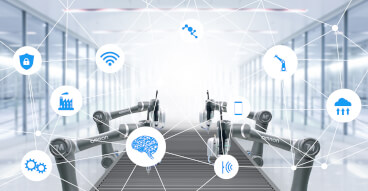
Can Artificial Intelligence (AI) in robot systems manage the functional safety parts?
20 March, 2023 Authors: Josep Plassa, Safety Product Marketing Manager at OMRON Europe and Atsushi Oshiro, Manager at the OMRON Development CenterRobots and AI systems have become an integral part of industrial manufacturing sites. To ensure the safety of workers while using robots, a detailed risk assessment is necessary. This assessment is carried out from the perspective of Functional Safety, which examines the five main elements employed by robots to determine autonomous control actions: Environment recognition, Action planning, Trajectory generation, Motion control, and Measurement.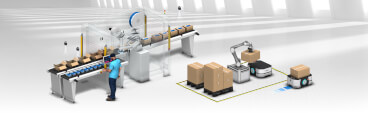
Automation for zero touch: Improving safety, quality and efficiency in F&B
15 March, 2021 Recent innovations in automation, robotics, image processing and artificial intelligence (AI) can help companies to migrate towards zero touch processes.
Affordable automation: Leasing cobots and mobile robots for flexibility on the factory floor
04 March, 2021 In line with the move to Industry 4.0, an increasing number of manufacturers are turning to automation as a way of streamlining processes and boosting productivity. A key aspect of this is the use of robots, often working alongside people in the factory. However, many companies might be reluctant to invest in additional automation, particularly following the economic difficulties presented by COVID-19. For manufacturers looking for an affordable solution, cost structures with leasing options are being implemented as an option to allow adaptability on the factory floor.
Four top tips for automation projects in the food and beverage industry
22 February, 2021 A challenge accelerated by the Coronavirus pandemic has seen producers having to juggle between longer term range proliferation centred on consumer demands, and range (SKU’s) reduction caused by retailers and consumers rapidly changing buying habits. Companies that break new ground by using innovative technologies not only gain agility but also reduce scrap, contamination risk, waste and losses.
Innovative cobot application improves safety at Leica Geosystems
11 February, 2021 Collaborative robot automates tray handling and improves safety and ergonomics in a hazardous working area.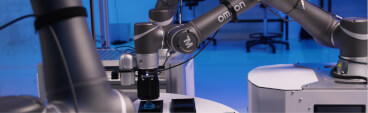
Developing smart and flexible production: Norwegian university sets up new manufacturing lab packed with robots
10 February, 2021 The Norwegian University of Science and Technology (NTNU) has developed a new educational laboratory in Ålesund to facilitate learning and extend the implementation of automation and robotics amongst manufacturers in the region. The lab is packed with a wide range of OMRON solutions – both hardware and software.
Powering the European automotive industry
29 January, 2021 The European automotive industry is facing strong competition from Asia, as well as the economic challenges of the pandemic. It needs to develop innovative, future-proof strategies and technologies that will boost both efficiency and sustainability. Tony Seba from Stanford University believes that by 2025, no more new vehicles with (pure) combustion engines will be sold and there will be a move towards battery or hydrogen-powered fuel cells. Meanwhile, the industry faces falling sales, increasingly strict emissions regulations, new technologies, digitisation and changing consumer needs. Companies must respond by converting their production lines; becoming more agile; and introducing innovations that provide a competitive edge.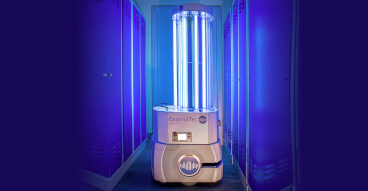
ControlTec helps Polish hospital tackle the pandemic with a UVC mobile robot
26 January, 2021 Using an OMRON LD mobile robot, ControlTec was one of the first companies in the world to develop a sterilisation robot equipped with a UVC irradiator.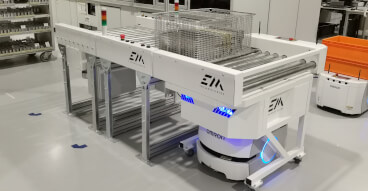
Fast and safe transport on the factory floor
18 January, 2021 Improved efficiency and seamless material supply: in Austria, Philips is automating material transport by using AMRs from OMRON.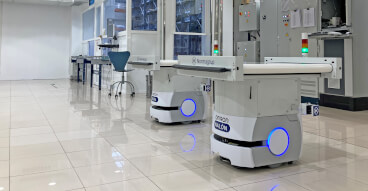
Improved flexibility, agility and traceability with mobile robots for Normagrup
06 January, 2021 Normagrup, which specialises in technologically advanced lighting, needed to automate the transport of materials between three production areas, the assembly area and an automated warehouse. This involved moving through narrow spaces shared with factory personnel.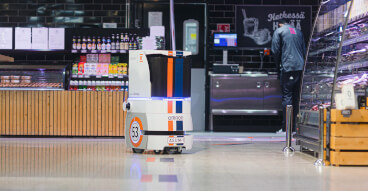
Mobile robot streamlines food deliveries
30 November, 2020 A whistling autonomous mobile robot has been seen recently moving around the corridors of shopping centre in Helsinki, Finland. Operated by OMRON’s solution partner Dimalog, the robot was taking part in a month-long ‘Home On-Demand’ automated courier service trial.
3 Ways COVID-19 is Impacting Logistics Operations in the UK (and what to do about it)
04 November, 2020 By Stuart Coulton, Regional Manager, OMRON UK North
What to consider when selecting a mobile robot for heavy loads
11 September, 2020 Five questions to ask when selecting autonomous material transport technology for industrial applications.
Developing digital capability: how any factory can be smart
16 September, 2021 Thankfully, the headline-grabbing ‘Industry 4.0’ isn’t reserved exclusively for the high-tech giants that span the globe, nor is the term ‘smart factory’ applied only to brand-new installations. In truth, any traditional factory can in principle take steps on the smart factory journey, by applying modularity to the existing installation.
Monitor machine stability with data science
16 July, 2021 Do you have a machine with no problems? You’re probably already collecting production and machine data, but not using it. With a quick scan of your data, it is possible to judge the usability and quality of the data and start using the value inside the data. This will help you define the first or next step towards a data enabled organization.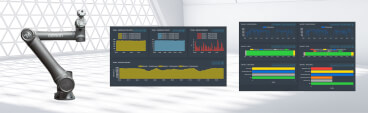
Cobot Dashboard: How to visualize data for OEE improvement the smart way
16 March, 2021 The factory of the future is not only based on a well-orchestrated interaction of the most diverse machines, robots, sensors, and AI technologies. Entrepreneurs and decision-makers are also increasingly faced with the challenge of reconciling the vast amounts of data collected by the various production lines and making the best possible use of it to support their decisions. Not only does a comprehensive data strategy need to be developed. There are also technologies required that process and present the data in such a way that issues are immediately identified before major problems occur.
Developing smart and flexible production: Norwegian university sets up new manufacturing lab packed with robots
10 February, 2021 The Norwegian University of Science and Technology (NTNU) has developed a new educational laboratory in Ålesund to facilitate learning and extend the implementation of automation and robotics amongst manufacturers in the region. The lab is packed with a wide range of OMRON solutions – both hardware and software.
Data paradise factory floor: get more out of your machine and production information
25 September, 2020 Strategic Data Science is an essential pillar of every Industry 4.0 scenario. A four-step data mining approach based on CRISP-DM supports successful projects.
Get the full value from your factory floor data with data sciences
19 June, 2020 Industry 4.0 and IIoT have been buzz words for several years and these concepts are actually implemented on more and more machines. A huge amount of data becomes available: machine data, data of the production process and data regarding the manufactured product. Big Data has entered the factory floor.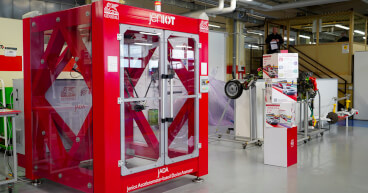
High-speed robot tests the reliability of black boxes
14 May, 2020 A non-destructive alternative to crash tests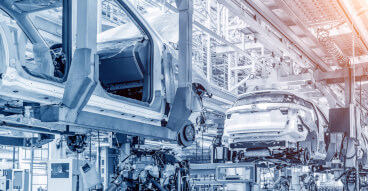
Integrated data control, motion control and machine vision for next-generation automotive production line
24 April, 2020 The Mexican regional headquarters of a leading manufacturer of premium air brake actuators for global on-highway and specialty markets required a new automated production assembly line. One of the company’s key performance indicators is to deliver a fully assembled product every 30 seconds, and it is with this end goal at the forefront that the team started the process of automating the production line.
IoT security for manufacturers
11 December, 2019 The Internet of Things (IoT) is a recent concept, involving the connection of devices that incorporate electronics, software or sensors, with the aim of collecting and exchanging data.
Smart machines: laying the golden egg?
16 October, 2019 Greater manufacturing efficiency: it’s the golden egg we’re all looking for. But it’s getting increasingly hard to find. The solution could be smarter automation, which involves lots and lots of data (‘big data’) and data collection and data-driven modelling. The smart machine then uses the models to automatically adjust its own behaviour (i.e. machine learning).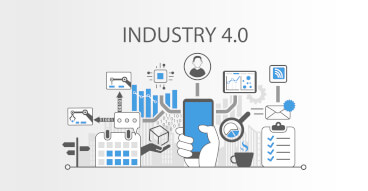
A practical illustration of IoT and Industry 4.0
01 October, 2019 The Internet of Things (IoT) is a relatively new phenomenon. Prof Dr Thomas Pospiech, a teacher of Production and Process Management at Heilbronn University of Applied Sciences, was interviewed recently about the ‘IoT box’ he’s developed to give his students a practical illustration of this fairly abstract concept.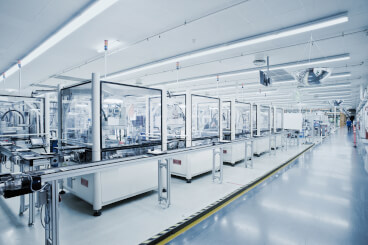
What is the effect of Brexit on automation in the UK?
26 September, 2019 Currently, workers from the EU have the right to travel and work freely across European borders. However, key statistics of net migration from the Office of National Statistics in the UK, show that net migration to the UK has been significantly reduced since 2016. With the announcement of Brexit, and the ensuing uncertainty around it, UK factories are perhaps no longer a viable destination for European workers.
Improve OEE with Artificial Intelligence at the Edge in Food Manufacturing
16 October, 2019 Implementation of Artificial Intelligence (AI) in food manufacturing is picking up speed. Many F&B companies are realizing that AI presents an opportunity to increase not only the Overall Equipment Effectiveness (OEE) – and therefore combine reduced costs with increased productivity – but also to improve the analysis of data to support continuous improvement programs such as reducing waste or process operations variability.
3 Steps to Optimize Operational Efficiency for the Future of Manufacturing
02 October, 2019 Operational Excellence is required to maximize capital expenditures. But at the same time manufacturers are challenged to move away from traditional high volume, low mix production runs, to more complex high mix, low volume production with consumer demand linked directly with production. How to optimize operational efficiency to be ready for the future of manufacturing?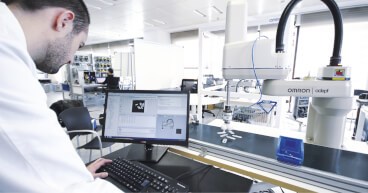
The power of collaboration between machines, people and teams
01 October, 2019 With today’s rapid advances in technology, the manufacturing sector needs to be increasingly agile, ready to adapt to changing demands. Production lines must be more flexible, so that they can cope with shorter production runs, more varied products and tight deadlines. So how can manufacturers address these challenges? The solution lies in more advanced, interconnected and intelligent systems that can be programmed to handle a range of tasks.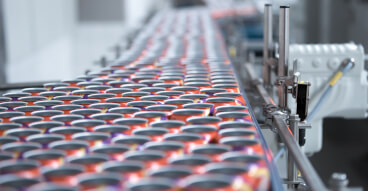
Minimum complexity, Maximum yield
08 July, 2019 Omron's leading position in packaging automation in the Food & Beverage industry is based on smart and simple solutions that result in solid success. A concept that we dubbed Perfect Packaging. Omron's Perfect Packaging approach structurally eliminates risks and boosts production even in tough situations when high throughput is required. But also optimises your filling. Minimising under- or overfill.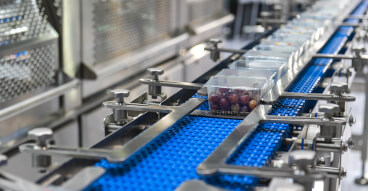
At Omron we serve to protect Package Integrity!
08 July, 2019 Protecting a product is the main purpose of any package. Food packaging that is not closed completely airtight can cause a whole range of problems resulting in huge expenses and problematic long-term consequences for manufacturers. Loss of nutrients and aroma to premature spoilage are the least problematic relative to the costly aftermath that easily comes around the corner when consumer health is at stake and recalls enter the media.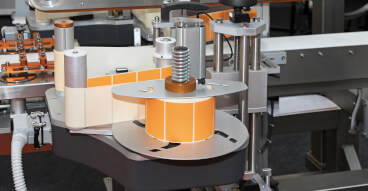
Perfect Packaging, ordinary packaging executed extraordinary well
08 July, 2019 Packaging processes rarely harbour extremely surprising variables. From manufacturers to system integrators, machine builders and industrial automation providers, we all know the essentials that make packaging production a definite success. However, the everyday reality on the factory floor is that small imperfections in the process result in major output disturbances. That is why Omron introduces its Perfect Packaging concept featuring smart innovations that ensure that ordinary F&B-packaging is executed extraordinary well. We help make your bottom-line top!
Go with the Adaptive and Dynamic production flow!
06 May, 2019 Flexible and fast responses to changes in market dynamics improve performance. Made-for-me production flows are the future of manufacturing coherent with Industry 4.0. A reality that Omron already provides today through its cutting edge innovative-Automation approach. Turning factory floor data into highly valuable information, we realize intelligent automation solutions for manufacturers around the globe.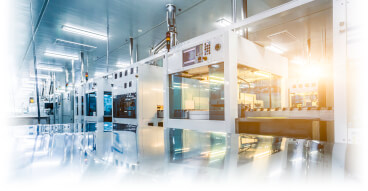
Smart sensing for multiple materials!
06 May, 2019 You know the routine. Switching from one product to another on your production line means a costly full stop, making all kinds of changes, starting up again, discarding the materials and packaging already fed into the line together with start-up rejects, and only then can production resume. Well, have we got good news for you: smart sensing for multiple materials!
Rock solid results with flexible production & robotics!
06 May, 2019 Today's market requires an increasingly agile production environment. Traditional industrial automation and robots are often too inflexible to successfully accomplish mass customization. Omron is enabling smart Industry 4.0 scenarios with a rare combination of intelligent automation solutions and robotics. Perfecting seamless human-robot collaboration and making more and more use of AI-driven possibilities, we assist manufacturers in realizing rock solid results with flexible production and robotics.
Direct link IT & OT puts factories on cloud nine
25 February, 2019 Just imagine getting rid of cumbersome middleware or PC data concentrators at your production locations and being able to enjoy the benefits of direct database connectivity. Where Information Technology (IT) & Operational Technology (OT) come together something beautiful happens. We have created a production environment in which databases and machine controllers are best friends and keep in touch continuously.
Don't let vibrations catch you off balance!
25 February, 2019 Machine operators are aware that sudden increases in vibrations or noise variations can herald a serious shake-up on their production lines. Unfortunately, it is hard for humans to quickly notice the indicators of, for instance, out-of-balance mechanics. The human touch is no match for dedicated sensors combined with high-speed Analogue Input Units that can reliably, precisely, and easily acquire synchronized data.